
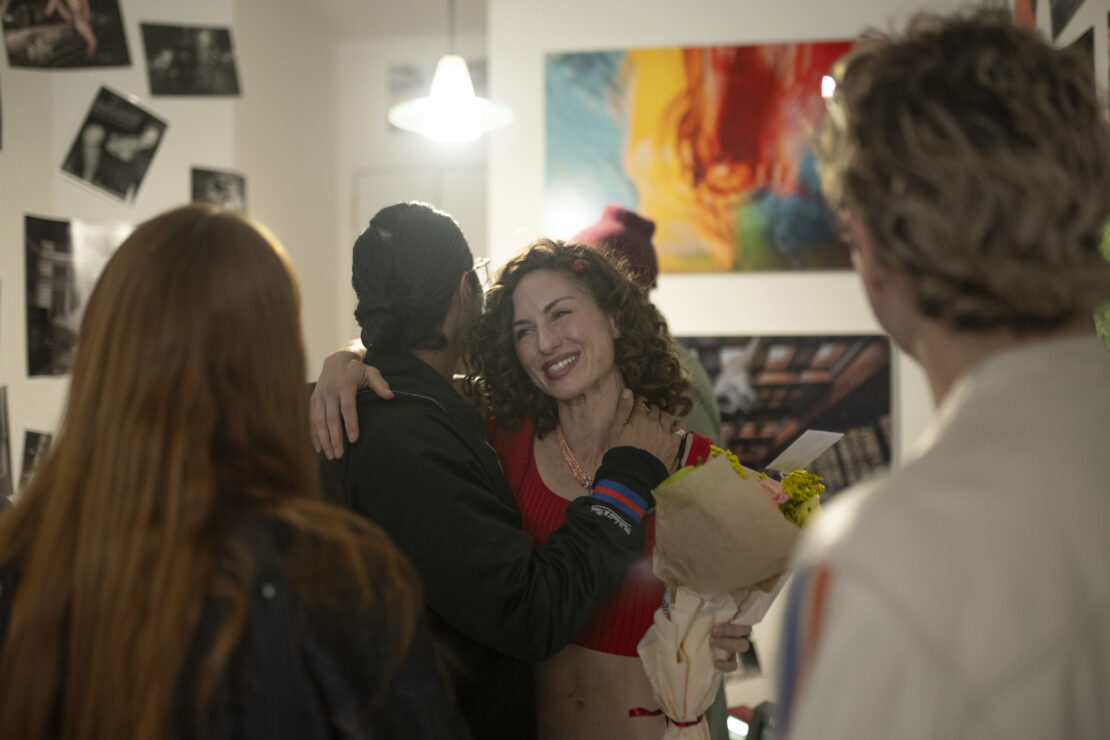
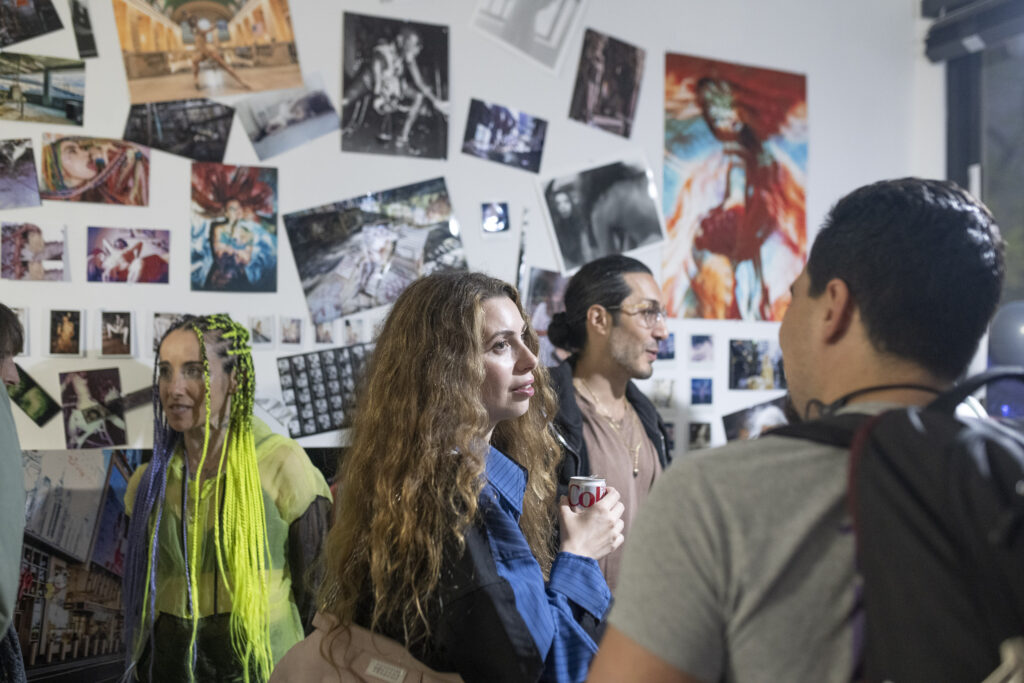
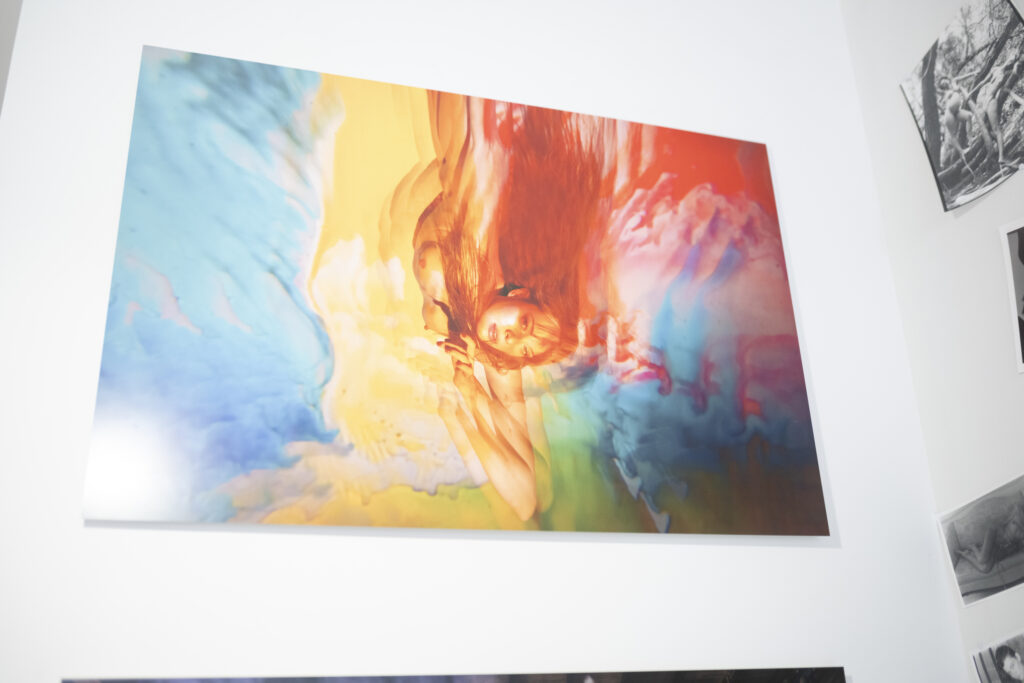
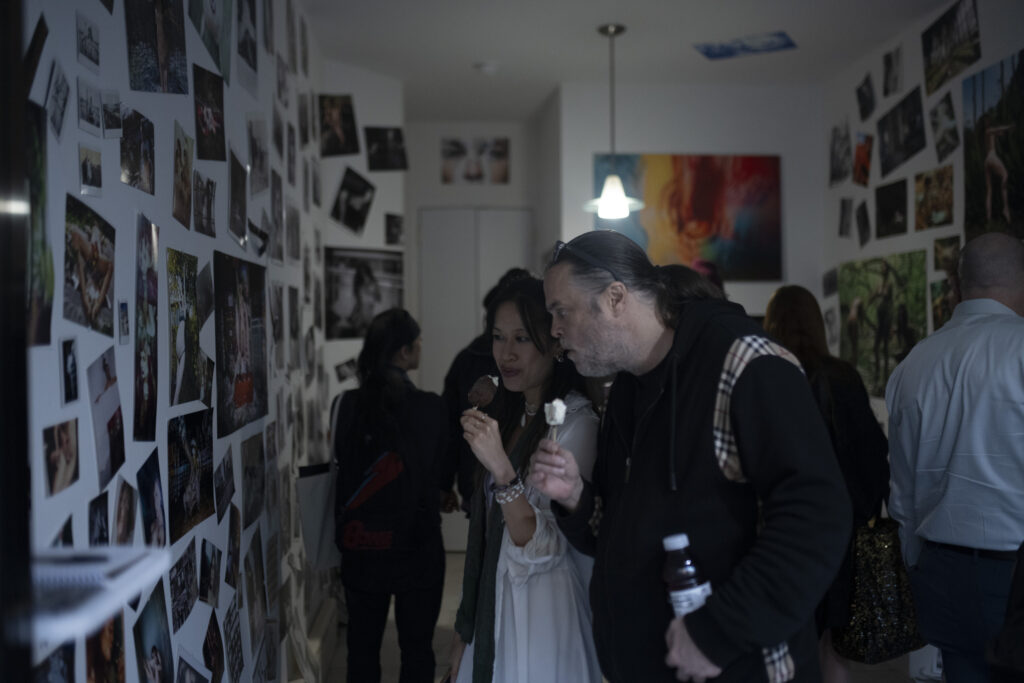
One of the main driving forces in art is instinct. Not to say that process, technique and even intent each play a significant role in whole sacred ordeal. However, as an artist, there is something about having an innate feel for your work that allows sparks to fly. Exploring the nuance of analog artistry, Laura Weyl‘s Requiem for the Camera at CIA Gallery delves particularly into photography and what comes to light when you spend more time in the dark room.
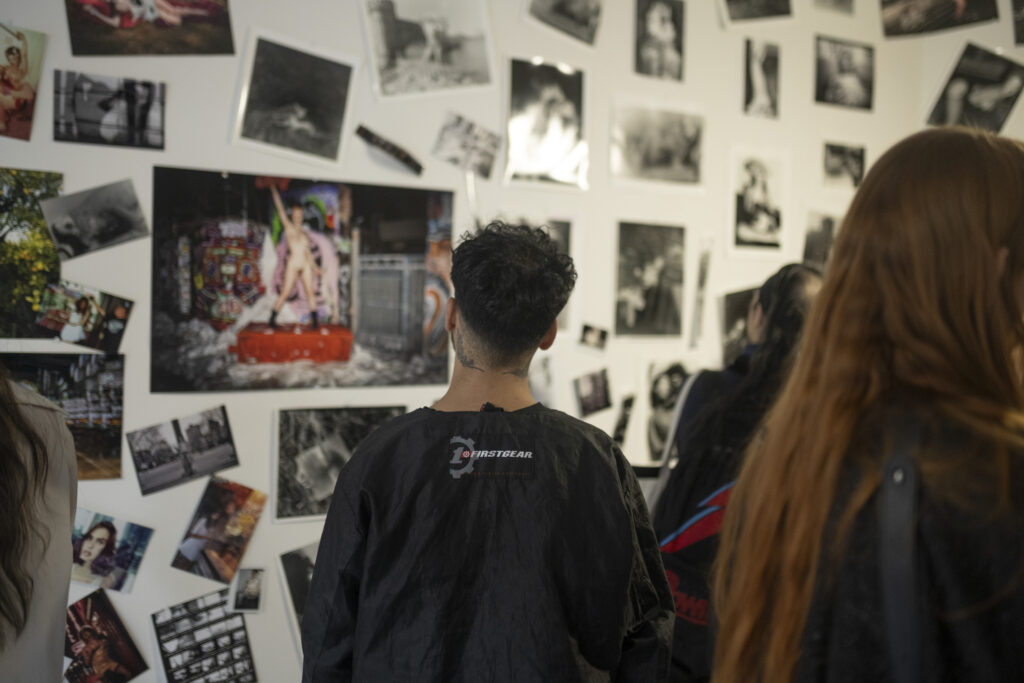
This isn’t some didactic display of disdain packaged as a sincere gesture of creative expression. Weyl isn’t some righteous purist on warpath against digitally made imagery. Not every photograph has to be forged in the fires of pompeii then steeped in the waters of Lake Minnetonka. What Weyl is doing is paying proper homage to the ritual of creating an image and the labors of love that go into translating and defining a moment. Requiem for the Camera also serves as a reminder to her fellow photographers of what is lost when they opt convenience and neglect the process.
To get a better idea of the objective of Requiem for the Camera, we had a brief sit down with Weyl who was more than happy to help us develop the bigger picture.
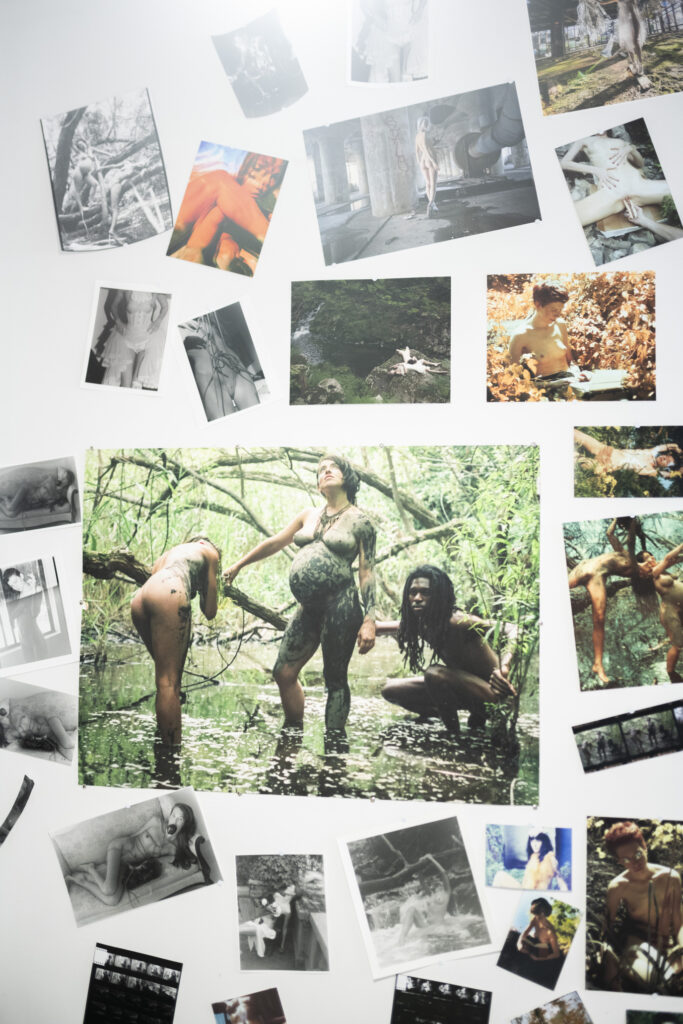
QUIET LUNCH: How did your existential compass lead you into being a living artist/working creative?
LAURA WEYL: “Being an artist never felt like a choice. It came from an inability, or maybe a refusal, to move through the world the way I was supposed to. I struggled with structure, with rules, with any kind of clearly outlined path. I was always pulled toward what felt off-limits or overlooked, following strange details and noticing things other people passed by.
That instinct really took shape when I was living in the Tenderloin in San Francisco. It was chaotic, intense, and visually overwhelming. I would walk through the streets and encounter moments that felt almost surreal. Not staged, just raw fragments of reality carrying a strange kind of tension or beauty. I started photographing them almost compulsively.
Taking pictures became a way of engaging with the world rather than just observing it. It gave form to something I had always felt but couldn’t articulate. That experience became addictive. It was the first time I could translate instinct and obsession into something tangible and have it recognized as real.”
QL: What is it about photography that encouraged you to embrace it as your primary medium of choice?
LW: “Photography felt like discovering a language I already knew how to speak.
When I found it in my early twenties, it gave me a way to translate intensity into something visible. There was also a physical connection. I come from a background as a competitive athlete, and photography mirrors that instinct. It’s about timing, reflex, and precision. Most of my images aren’t composed so much as captured. I’m reacting to something as it happens.
It also gave me a reason to step outside of ordinary life. It became a kind of permission to enter spaces that felt abandoned, off-grid, or forgotten. Bringing people into those environments and photographing them became almost ritualistic. Not just documenting, but activating something in those spaces.
More recently, my relationship to photography shifted again when I started working in the darkroom at International Center of Photography. I’ve been printing exclusively in black and white, even though I’m naturally drawn to color. The process is slow, physical, and unpredictable.
What draws me now is the contrast. The moment I capture is immediate and instinctive, almost gone as it happens. But developing it unfolds slowly, through chemistry and time. That tension has reshaped how I think about time and experience. A fleeting instant can stretch, deepen, and return in another form.
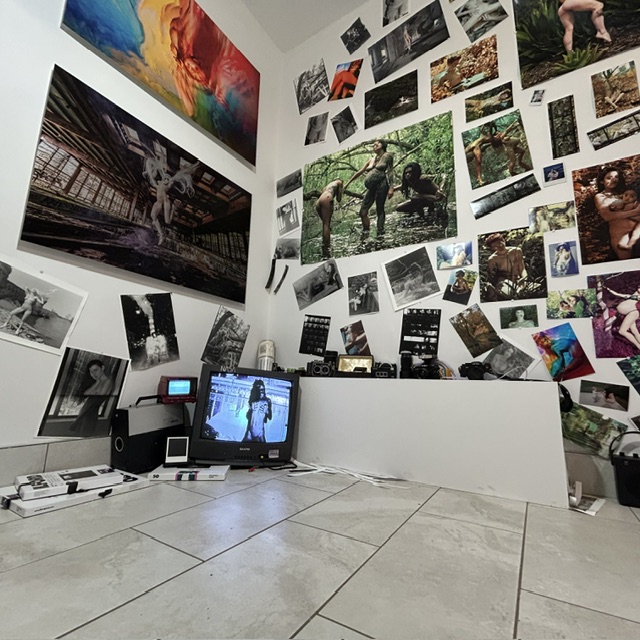
QL: How do you feel about the current presence of A.I.?
LW: “My relationship to A.I. has been pretty direct. I got early access to generative image tools in early 2021 through a back-alley deal with a crypto bro, before most people were paying attention. I was experimenting with early versions of Midjourney and DALL·E, and it was immediately clear to me that this was going to change everything.
At that stage, the outputs were unstable and strange. Text would collapse into gibberish, compositions would break or mutate. That phase was revealing because you could see how the system was constructing images from fragments rather than understanding them.
It has since eroded the authority of the image. Photography used to carry an assumption of truth. That’s no longer reliable. The sheer volume of generated imagery has also flattened the impact of any single image. We’re conditioned to consume and discard thousands of images without absorbing them.
I’m not interested in rejecting A.I. I’ve always used whatever tools allow me to express something fully. What interests me now is where A.I. goes beyond the static image into something more immersive and interactive, because still images alone are no longer enough to disrupt perception.
At the same time, this shift has made analog processes feel more significant. In a landscape flooded with synthetic imagery, physical image-making carries a different kind of weight.
For me, A.I. isn’t the end of photography. It’s a pressure that’s forcing it to evolve.”
QL: There is a certain rawness and instinct to your work. Do you feel like that comes from your willingness to engage in the analog process? What is your response to those who may label you as a purist?
LW: “I’m not loyal to one tool. I usually show up with multiple cameras, digital, Polaroid, and film. Each one gives me a different way of responding. Film holds a particular weight because of its finality. Once it’s captured, it’s fixed. There’s no endless refinement. That matters in a culture where everything is constantly altered and filtered.
The process itself is just as important. Shooting is fast and instinctive, but developing is slow. It forces you to wait and sit with what you’ve done. That shift creates a different relationship to the work.
I’m very aware that almost any aesthetic can be simulated now. I work in digital and A.I., I know how to recreate the look of film. But what happens in the analog process itself, the physical interaction, the chance, the commitment, is impossible to recreate. There’s something embedded in it that carries through, whether you can explain it or not.
I don’t think of myself as a purist. I’ll use whatever tools serve the work.
What feels more important now is the presence of the artist behind the image. We’re at a point where you can’t assume anything you’re seeing was made by a human. Because of that, the story, the process, and the lived experience behind the work have become central. That’s what people are actually searching for. Not just the image, but the connection to the person who made it.
Film intensifies that sense of presence. It carries the trace of a real moment and a real body moving through space. In a landscape saturated with generated imagery, that connection becomes the thing that still holds weight.”
QL: We’ve already determined that the intent of Requiem for the Camera isn’t a didactic one. With that being settled, what advice or pointers would you bestow upon a photographer who is trying to identify and/or hone their own process?
“I think now more than ever, photography is less about perfection or technical mastery and more about obsession, pursuit, and presence. The image alone is no longer enough. People want to feel the human being behind it.
My advice would be to find something you can’t stop looking at. Find the places, people, or moments that ignite your curiosity to the point where you feel compelled to follow them further. Use the camera as an excuse to dig deeper into the world. Go into the back room of the party where things become strange and unguarded. Climb the mountain. Enter the abandoned building. Stay long enough for something real to emerge.
The most powerful images usually come from genuine pursuit, not control. They come from the willingness to follow instinct instead of trying to manufacture perfection.
I also think audiences are craving something deeper now because we’re drowning in imagery. What people respond to is not just visual polish, but evidence of lived experience. They want to feel that a real person became obsessed with something, chased it fully, and captured a moment of truth without fear or compromise.
That, to me, is the real process. Not mastering the camera, but learning how to remain emotionally and psychologically open enough to recognize when something meaningful is happening in front of you.”
Akeem is our founder. A writer, poet, curator and profuse sweater, he is responsible for the curatorial direction and overall voice of Quiet Lunch. The Bronx native has read at venues such as the Nuyorican Poets Cafe, KGB Bar, Lovecraft and SHAG–with works published in Palabra Luminosas and LiVE MAG13. He has also curated solo and group exhibitions at numerous galleries in Chelsea, Harlem, Bushwick and Lower Manhattan.