
The Morean Arts Center rests in the perpetually sun-rinsed downtown St. Petersburg, Florida. This year the Morean celebrated its 109th year and became a legacy institution. But with Amanda Cooper at the curatorial helm, they don’t intend to rest on their laurels.
Fresh Squeezed 10: Emerging Artists in Florida, their latest showcase, best exemplifies this effort, featuring eight budding artists that span the whole of the Sunshine State.
Ysabel Flores, Kimberly Vorperian, Clancy Riehm, Jamie Rodriguez, Alberto Alonso, and Angelina Palmisano, Gillian Probert, and Gwen Mehler.
Opening reception, April 11th was abuzz, the concrete floors and freshly whiteboxed walls that sing gallery welcomed guests in from the humid night. But the building was packaged enough that a new heat grew between the guests as they sipped, or gulped, the art on display.
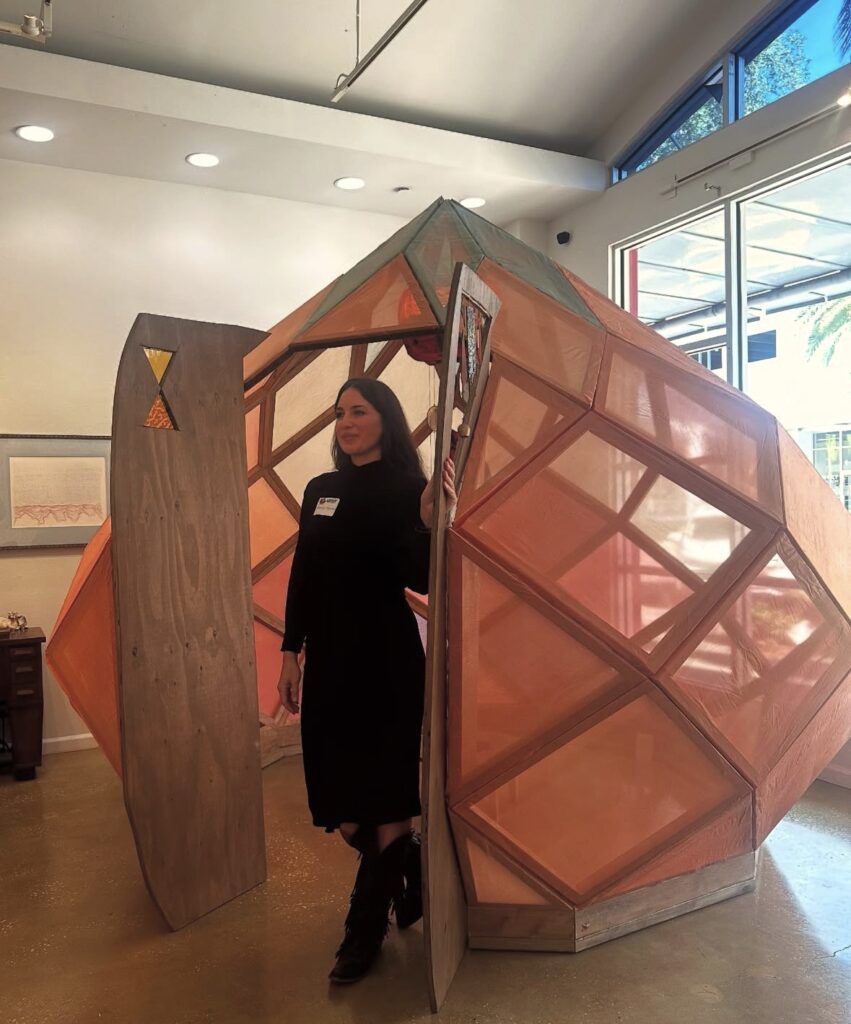
Immediately, the impact of Kimberly Vorperian’s installation “Tomato Hut No. 10” arrests gallery-goers. How often do Floridians get a taste of full-bodied installation art outside of the elite museum setting? Vorperian labored the entire week before opening like a true craftsman set to task, with electric drill in hand, outfitted in overalls that were fittingly equal parts bohemian and workmen’s wear. She’d materialized a yurt-adjacent structure designed in the spirit of a tomato, that gallery-goers could weave in and out of. Inspired by the folk-traditions and folklore of her Armenian and Eastern European ancestry, and her experience farming in tune with the Florida land.
The entire show is a celebration of Florida itself, as only Floridians know her. But Vorperian’s work crafts a culture all its own. A folklore that feels foreign yet familiar, this must be done up in the folk art tradition of some country overseas I can’t quite remember from maps in school, one might muse. And yet, there is this sense of a deeply lived in fantasy culture embedded in the work. Tiny wood works and framed pictures hang along the walls, a hand-cut glass mobile glints under the coral glow of the tomato hut, and a desk full of well-imagined oddities waits in a corner. As if someone’s grandma has just left her day’s housework for the afternoon to till some far off farmland.
Adjacent, lies the work of the undeniably affable Ysabel Flores. She may have the cozy cuteness of a cartoon character, but she is more experienced in the world of fine art than one would presume on looks alone.
Within the first hour of the show’s opening, an eccentric man who’d just won the lotto stumbled in and purchased her coveted forest-scapes painted into strips of burnt canvas on the spot. Flores’ work speaks to a deconstructed Floridian landscape both visually and conceptually, with abstracted pieces of portraits that sneak through between the split pines upon closer inspection. Like a generationally beloved matriarch’s identity dispersed throughout the identity of swamplands that are currently being sold off piecemeal to corrupt developers.
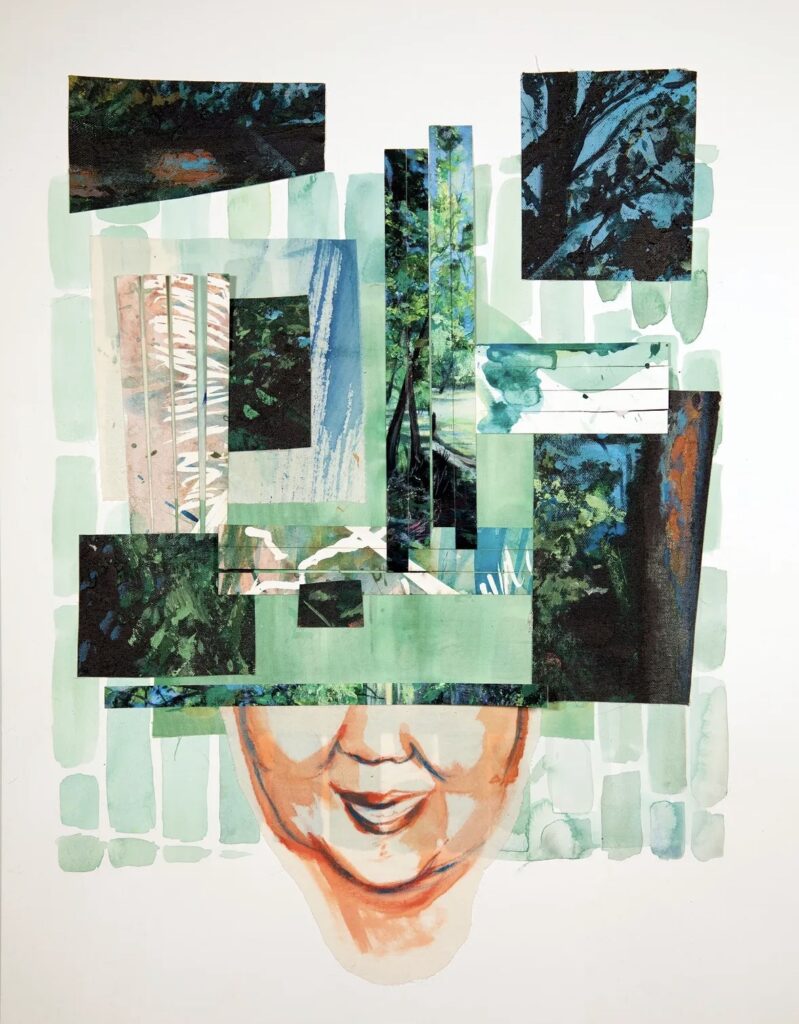
Fleeting Knowledge
Collaged acrylic paint and photos, on canvas, paper, and muslin
2026
The pulse of the crowd thrums into the next room, covered in Clancy Riehm’s graphic works. Orange and aqua screenprints of Pelicans, Spoonbills, Coastal White-tailed deer fractured into geometric shapes lie in their frames. The locals and vacationers alike seem to be eating it up, as Riehm’s has to restock her prints fairly frequently despite just going full time in the arts this year.
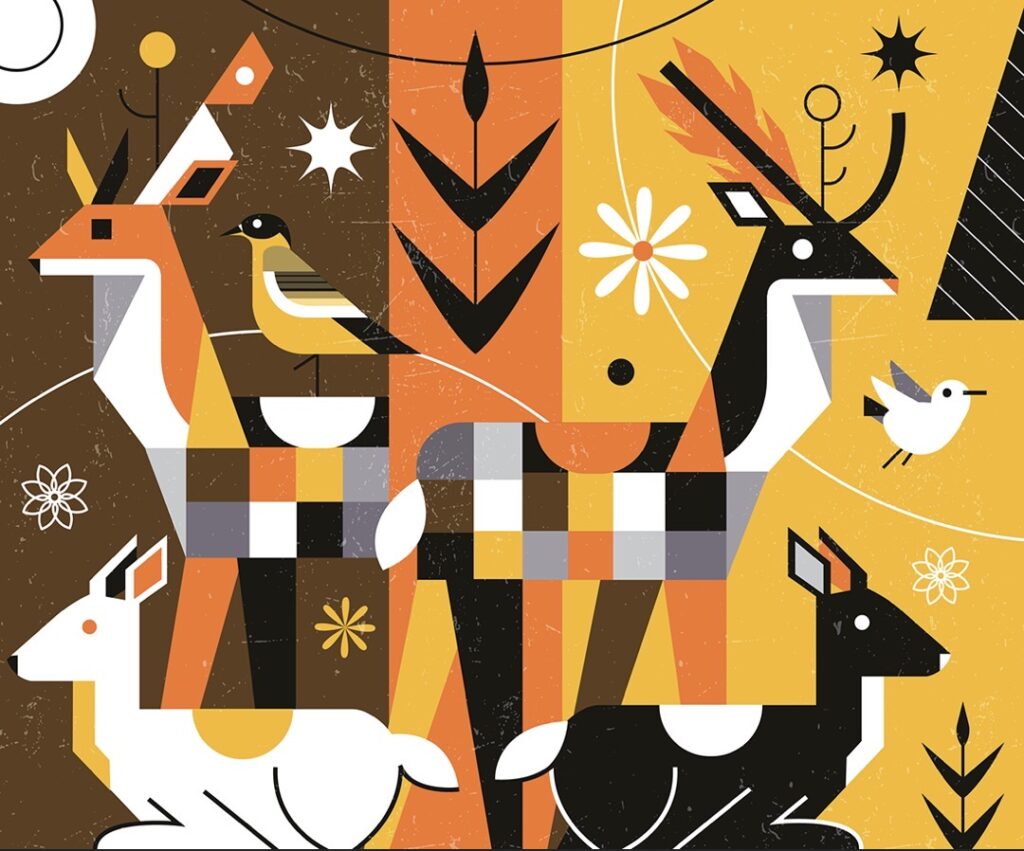
Screenprint on canvas
2026.
Next on display is Jamie Rodriguez, where inspiration truly began to take flight–his unusual spoonbill sculptures simply cannot be missed! Foam, and concrete, and reclaimed materials, and clay? One is initially curious but unsure must search with a keen eye to peel back all the potential materials of Rodriguez’s newly imagined and lovingly sculpted bird species. His wildlife is both of our world and of theirs. As well as a secret third space we have yet to visit. Reimagined wildlife that is all at once exotic yet familiar, interrupted by the human hand yet submitting to nature.
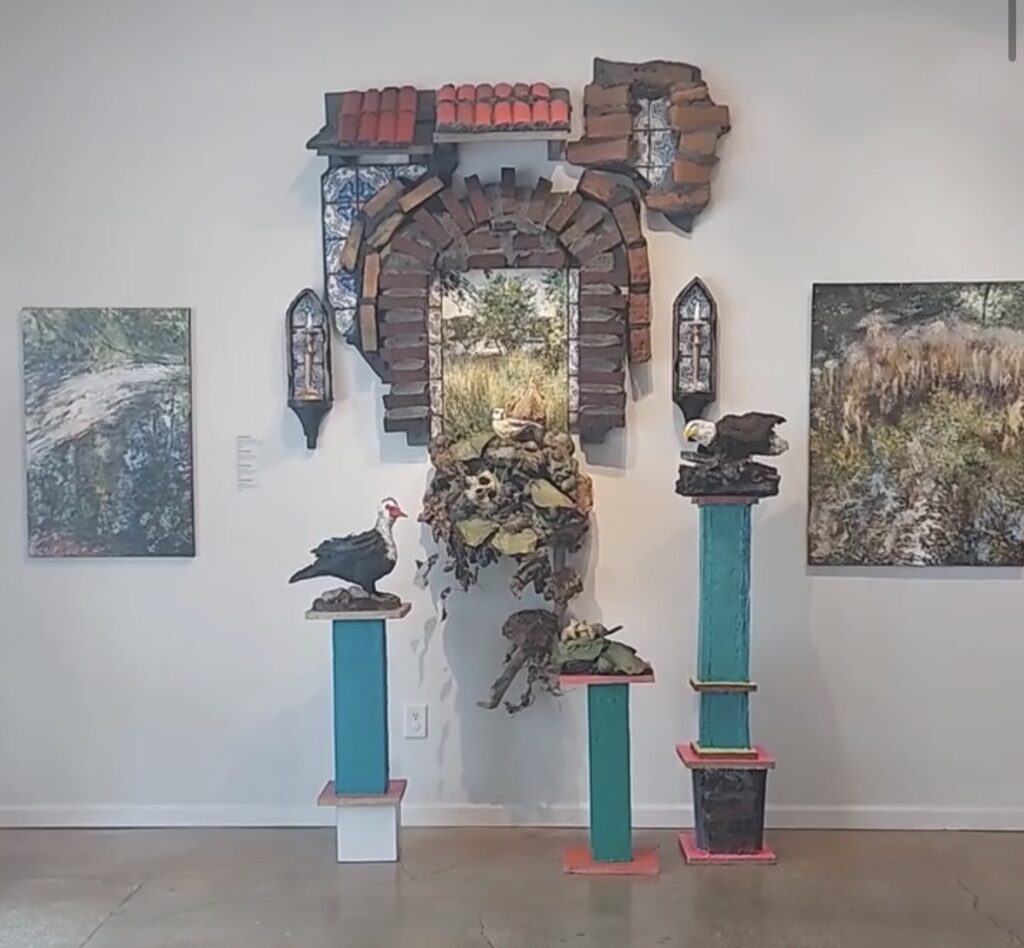
Mixed media installation
2026.
Cross chatter and wine glasses clink into the next room where Alberto Alonso’s paintings inhabit the walls. If one has caught their breath from the mixed media wildlife of the room prior, Alonso’s paintings will surely steal it again.
Unpredictable mark making and color palettes swish across large canvases. This work sings of Puerto Rico, this work sings of home. It may not be ours, but the artist is letting us borrow it. Quiet Lunch enjoyed in depth chats with several of the artists, including Alonso, wherein compelling insights into their work are shared below.
The circlet of gallery coves completes its loop with the work of Angelina Palmisano–and if spirits haven’t already crescendoed in inspiration built from the last two artists, Palmisano’s paintings will froth them into a frenzy. Our Q+A portion begins here, with the Native Floridian female artist:
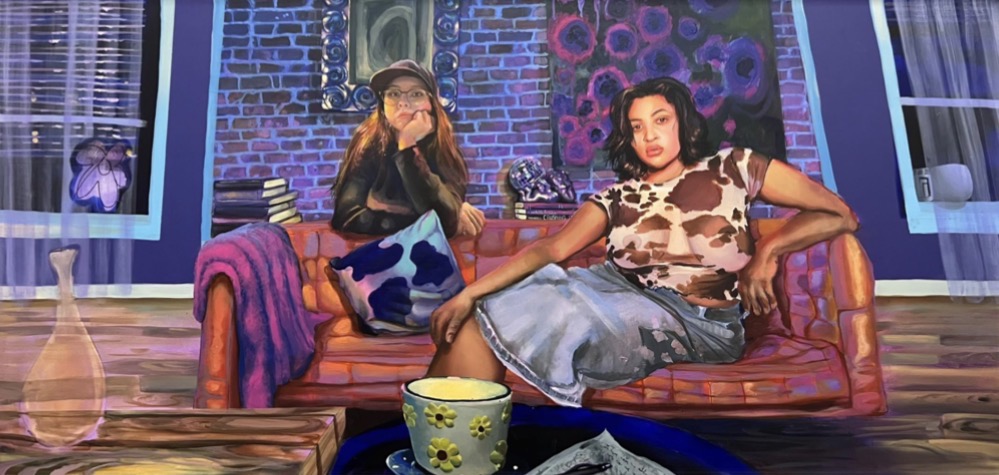
Quiet Lunch: The Morean Arts Center celebrated a decade of this showcase of emerging Florida artists on Saturday. In what ways does your work speak to your personal experience of Florida? Do you feel your background and lived experience leaks into your art as a primary influence?
Angelina Palmisano: I was born and raised in Central Florida, which I have learned isn’t so common. This place has always been home to me and is solidified as a huge part of my identity as both an artist and individual. I adore Florida’s flora and fauna, especially our different palms trees and gators. Landscapes featuring water is something I really enjoy painting. Florida is full of wild people and animals, and I find it exciting to be around. I don’t think there is anywhere that has the same quirky, chaotic, yet beautiful energy that Florida has.
QL: Can you share the story of applying and being selected for this showcase? What was the studio visit from the curator and Morean girl gang like? How was the lead up of all your previous experience in the art world, and your vision for your artwork?
AP: I am always trying to find a way to share my art with the world. Getting accepted into this exhibition has meant a lot to me. I know that I’m passionate about my work and have something worth sharing, yet the tough part about trying to build a life from your art is that you are not always going to get accepted into everything that you apply for. I really wanted this one and felt so honored to be chosen. In the application process for Fresh Squeezed 10 I felt it was imperative to come across as authentic as possible and share my story. At the end of the day, all we have is our stories. I come from very humble beginnings and have experienced a lot of hardship. The art world demands tenacity, and I have thicker skin for it. I’m just grateful to be able to be a part of any of it.
QL: Talking to you on opening night, I got the impression that many of your figurative paintings are sparked by a muse. Your subject’s have this air of like, “the coolest girl you’ve ever met at a party in Flatbush, who showed you how to curl your hair with beer bottles.” How integral are these “muses” to the development of a painting, from the seedling of a concept, to the final brush stroke on the canvas?
AP: I love this question. Some of my friends have become muses because they are the coolest people on the planet. I admire when people are unapologetically themselves, which is easier said than done. Most importantly, I admire kindness and humor. We are all flawed and come with our unique experiences, but the true heroes are those of us who stay sweet and can manage to still laugh in the face of adversity. I think some of the funniest people are the ones who have been through some bad shit.
If you can make me laugh, chances are, I’m enamored and would love to try and capture that glow with my brush. When everything is peachy in life it’s easy to get along with most anyone, but it’s the people who can crack a joke that makes you smile while sitting for hours at the DMV, on the side of the road with a flat tire, or amidst heartache that make the world go round. The people with great personalities are those that I try to capture.
QL: Your pieces in this showcase were created with acrylic paint and airbrush. How long have you been exploring the unique medium of airbrushing? What are its greatest challenges, as well as its greatest boons to your work in your opinion?
AP: I have always used acrylics and fell in love with the airbrush as soon as I was introduced to it. I pride myself on using pretty inexpensive, or even free materials. I will make trips to the Home Depot and see if they have free house paint that they messed up mixing that they are going to toss, or free samples from local conventions. My studio practice is an honest reflection of who I am, and my paintings are an extension of that. I don’t believe an artist needs expensive paint to make good work, and it’s more impressive if you can make something worthwhile despite your circumstances.
Airbrushing is wonderful because a little bit goes a long way. Light is how I convey emotion in my paintings and airbrushing adds a magical layer that captures luminescence in such a delicate and soft way making a piece romantic and emotionally charged. The drawback is that it can be very easy to overdo. It’s extremely impactful yet I would say I only use it for maybe less than10% of the overall process.”
QL: Your mark-making and subject matter feel very exploratory and personal. Can you walk us through your long term process of finding your style?
AP: I am equal parts a process painter as I am a representational one. By that I mean, the act of creating the art itself is just as important to me, if not more than how technically rendered the image turns out. The physical experience of mark-making on the canvas is what allows me to have fun and play while I make work. I love putting thick swabs of paint and seeing what happens as colors blend. It’s also what keeps it from becoming contrived or stagnant. I believe that whatever active feeling the artist is experiencing while making art, get transcribed into the paint.
For my style, I try to focus on my intuitions and let them guide my choices, I think this is how I’ve been able to make work recognizable as my own with its playful nature. I try not to worry about the end result and instead live in the moment with every stroke. I remind myself that making art is supposed to be fun and that I don’t want the militant restraints of trying to make a perfect image in the room–it makes for boring art anyway.
QL: I’m curious, what has your audience’s response been to all the fun esoteric tidbits that proliferate that scenes you create in your paintings?
AP: It’s actually one of the most unexpected and rewarding aspects of watching people engage with my work! I love sitting back and listening to their conversations and the excitement as they point at each detail and talk about what they think it all means. My compositions can be jam packed with information and items, and I really enjoy hearing people laugh and smile as they notice them.
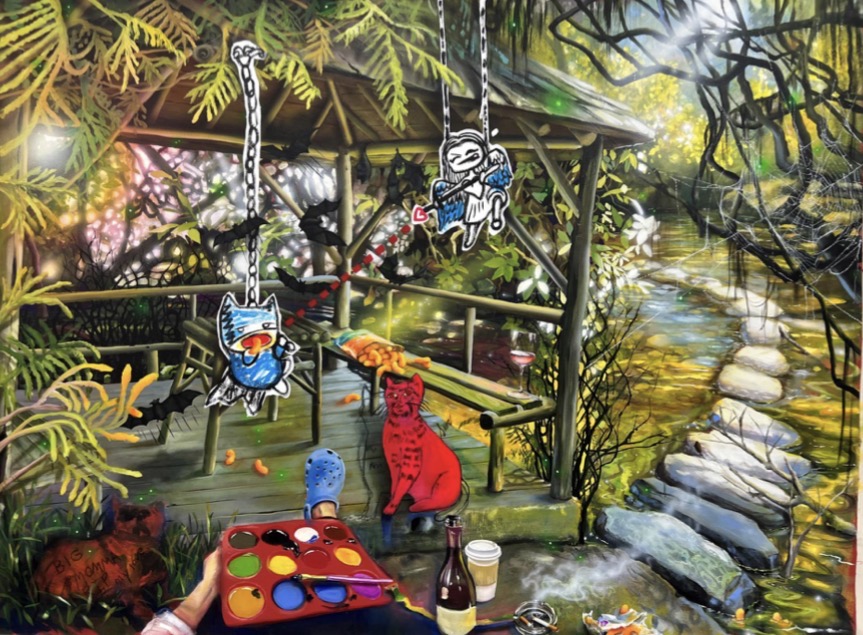
Peaceable Kingdom
Acrylic and airbrush on canvas
4.5ft x 6.5ft
2024.
Next, we had the pleasure of speaking with the aforementioned Jamie Rodriguez:
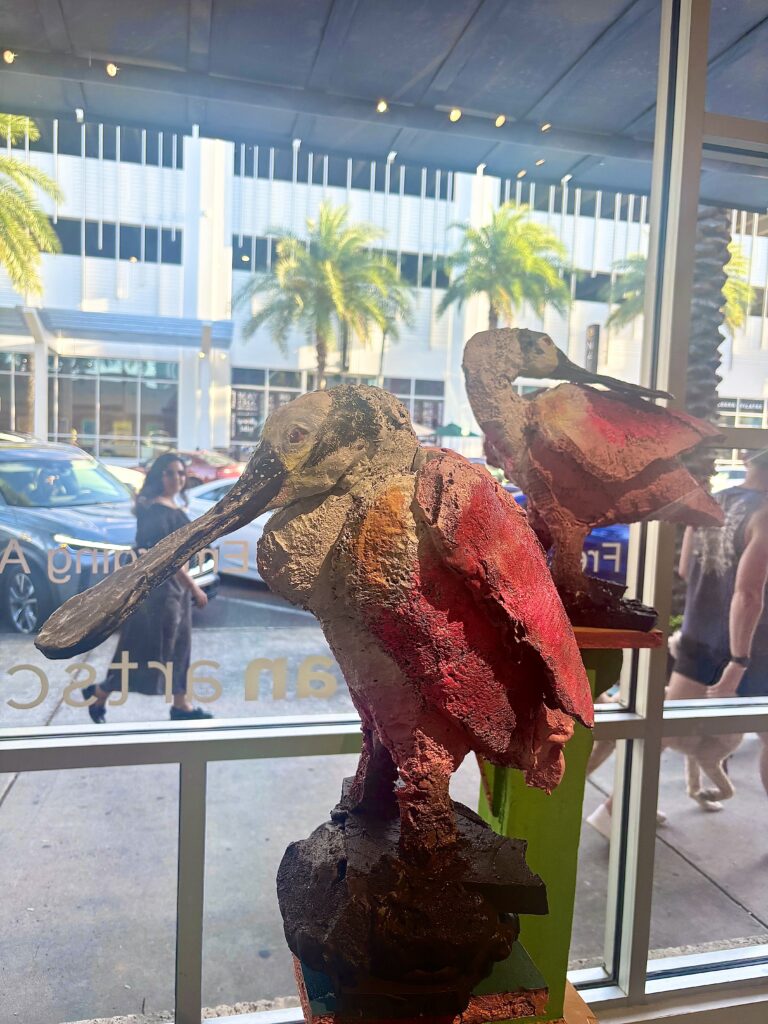
Spoonbills
Mixed Media
2026.
Quiet Lunch: The varied textures and materials of your work stands out quite a lot. Can you share more about the mediums you utilize and what does into the decision making about which ones you end up combining?
Jamie Rodriguez: Sure, the mediums are mainly xps insulation foam board, foam sealant and wax. The foam allows for larger and lighter sculptures with manipulation of surface and textures while the wax allows for a more detailed executed part of the sculpture. The decision making is about the contrast of the abstract and representational in proximity to one another.
QL: What do you find to be the most challenging mediums and materials to work with and why? What were your first experiences in art-making like?
JR: The most challenging medium I find to work with is watercolor because it is the most unforgiving. As far as materials it is any material that involves carving with the subtractive process. My first experience in art making in life was as a sophomore in college, beginning sculpture class sculpting the figure from life.
QL: Your sculptures and paintings yell Florida and really sing to the environment. In your own words, can you share how your work connects to Florida?
JR: Sure, I am not a native Floridian, I am a transplant. As a transplant I am attempting to put down roots. In simple terms I am not a tourist or a temporary visitor. Florida is my home, Florida is my dwelling, Florida is my surrounding, Florida is my sanctuary. Florida provides the energy, synergy and convergence for my ideas and thoughts. That is how my work connects.
QL: I was especially enamored with your spoonbill sculptures! Congrats on getting a street view window display for them by the way. When did you first start to hone in on native bird species, and is there anything about them in particular you seek to bring into focus with your artwork?
JR: The Spoonbill is a majestic and beautiful creature for myself. It also has a prehistoric vibe to it. I first started to hone in on it while running on trails near a lake in a park in West Palm Beach. Its flat spoonbill and pink feathers just caught my eye and it looked like an interesting sculpture that I need to recreate. So I decided that yeah, I need that aesthetic and presence.
QL: How has your education and experiences in the arts lead up to earning this slot in “Fresh Squeezed” thus far? What are your aspirations for your work moving forward? Any ideas for new series you’d be willing to share?
JR: How my education and experiences have lead up to earning this slot is that it has given me the confidence and conviction to just do what I do and just be who I am. I can only hope that it is embraced and acknowledged. My aspirations for my work moving forward is to embrace becoming a maximalist and mastering my task and purpose. My ideas for a new series that I am willing to share is that it will be influenced by timing, location and attitude.
And last but not least, we have our conversation with Alberto Alonso:
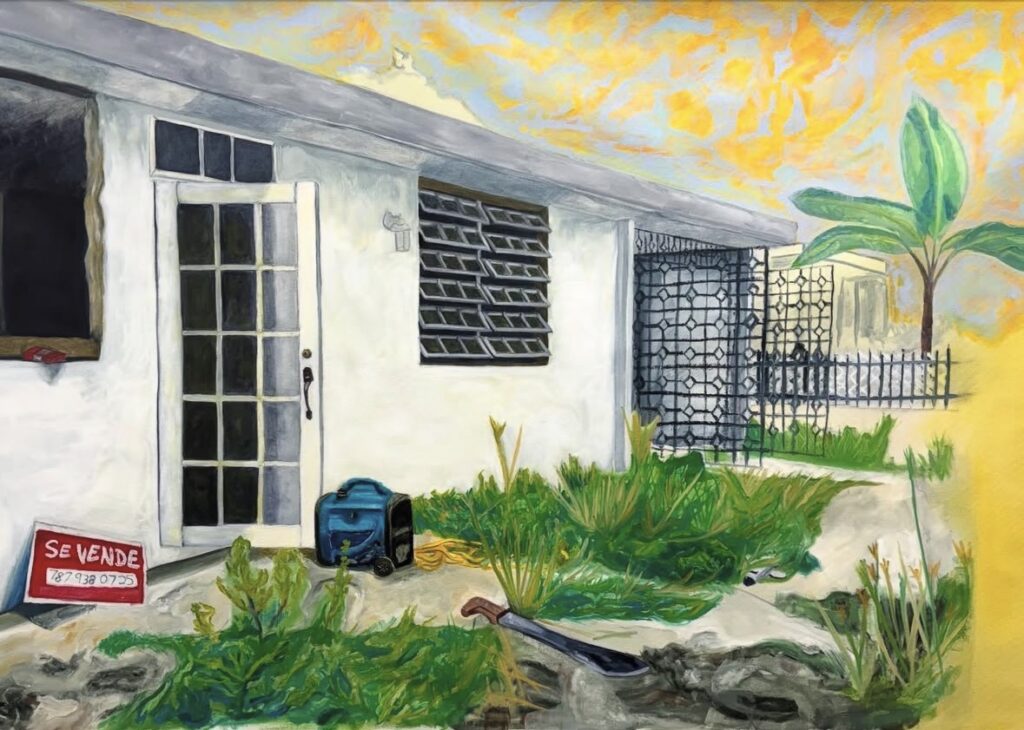
Untitled
Oil on canvas
72.5in x 92.5in
2026.
Quiet Lunch: One of the first things that engrossed me in your paintings so much was the mark making, and the unexpected decision making I could see on the canvas. The brushwork feels so intuitive. I recall the background of a particular piece that played with a muted periwinkle against strokes of neon orange. Opposites on the color wheel, yet the saturation, varied mark making, and texture were all such inspired deviations. How intuitive and spontaneous is your actual studio practice? Do you actually make decisions about these elements and principles of art in a very calculated, slowly-conceived way?
Alberto Alonso: I enjoy using the impasto technique to paint. I very much like that gooey-looking thickness and texture I can achieve through oil paint. For the most part, I’d call my process intuitive with some spontaneity. Born and raised in Puerto Rico, I am drawn to colorful subject matter and interested in how complex feelings of homesickness and nostalgia shape my perception of Puerto Rico. I aim to stylize the formal elements of my subjects as a way to show how Puerto Rico, and everything I associate with it, feels to me. Some things become sharper, more detailed, while others are blurred or abstracted.
QL: Walk us through your personal connection to the figures, subject matter, and themes in your work. And what you hope viewers will take away with as much detail as you’d like to offer.
AA: Having been born and raised in Puerto Rico, I have found the island to be a very important place for my artistic practice and journey. Not only is this the place I consider home after moving to Florida, but it’s also where I developed my deepest psychological and emotional connections to the people, the island, and its culture. Even though I am geographically close to Puerto Rico, it feels mentally distant and physically inaccessible. This, along with adapting to an environment that feels racially and politically hostile, has been enhanced by my feelings for Puerto Rico. I like to paint landscapes or pull things from older family photographs because it’s what feels familiar to me, and I long for that place. However, whenever I go back to Puerto Rico, it’s a different place. The Puerto Rico I grew up in is now only in photos, recollections, and family stories. Whereas the actual Puerto Rico changes due to political, anthropological, and natural forces.
I am also interested in the idea of home distorting over time. Home tends to be a space where we feel physically and emotionally safe and connected to the people, culture, and environment. For me, it is a space or place that exists only in our memories and becomes fragmented and reconstructed over time, shaped by our identity, longing, and homesickness. Each time we remember something, our brains reconstruct the memory while distorting it over time. I like abstracting my sources to mirror how it feels for me to remember the island.
QL: What does a typical day in the studio look like for you? Can you expand on your process; from the seedling of an idea for a painting, to percolation and prep, gathering reference imagery, actually painting, etc? How long does a single painting typically take you?
AA: On a typical day in my studio, I arrive and continue working on whatever I have in progress. When I am starting a new piece, I like to look through photographs of Puerto Rico, either pictures I have taken in my travels to the island or older family photos. Initially, I am drawn to one main subject: a building, a person, or a landscape. Then I start collaging with those same photo sources, either physically or digitally, arranging other items into one composition. Once I have a composition I am satisfied with, I use a projector to transfer the image onto a larger surface and paint at a larger scale. Although I prefer to make larger pieces, it depends on the materials at hand and the available space. I like to set aside the paint tubes I will be using for the painting and then squeeze the paint onto my palette.
When I paint, I usually have to listen to music, mainly Bad Bunny or similar artists. There’s something about listening to music in Spanish that stimulates my brain more than songs in English. Usually, the painting process takes at least a week, depending on how large and complex a piece is. I always remember something that my painting professor says, “I expect you to spend 50 hours in each of your paintings. And I don’t mean 15, I mean 50, five-zero.” So I always try to spend a good amount of time with a piece, sometimes physically engaged in the process, and other times just staring at it while asking myself questions like: what does it need to be? What else does it need? Why am I making this? What am I trying to remember, feel, or say?, etc. Most of the time, I don’t find an answer right away, or I find it during the process.
QL: “Fresh Squeezed” celebrated its 10th anniversary of highlighting emerging Floridian artists. What role does this peculiar swamp and “Florida Man” filled state play in your work? Your paintings evoke a sense of intimate memories. Cultural quirks that run deep yet feel comfortable and familiar. Like the sensation of sitting on your grandma’s kitchen floor watching her bake a generational recipe. Or the corner store you bike past every Sunday after Church. Even though we each hold inner histories of our own hyper-specific memories and family traditions, your work invites the viewer into a shared sense of nostalgia. What are your thoughts on that interpretation of your work?
AA: Florida plays an important role in my work in ways that aren’t visible in my work. It’s where my life changed, and I transitioned into the arts, and it has since become my second home. It became the place where I joined the Puerto Rican diaspora, and ironically, where I came to understand what Puerto Rico meant to me. Being physically distant created space for reflection and introspection, giving way to a new perspective and identity that I always carried but never fully examined. Not only is Florida personally significant, but it is also historically significant as the state with the largest Puerto Rican population in the US. Its proximity to the Caribbean makes it a sort of midway point where I find myself close enough to return somewhat frequently and ease my homesickness.
As for the interpretation of my work, I’d say it was pretty on point. Although my work is personal and tied to my and my family’s lived experiences, I am glad it resonated beyond me. Usually, people from backgrounds similar to mine tell me that my work makes them think of their home. I am very interested in the mundane, ordinary, and intimate environments or moments we tend to take for granted, and grieve once they become inaccessible or re-examined. Regardless of where the viewer is from, I want to evoke a shared sense of nostalgia and invite them to reflect on their relationship to home. We all have a place or space that becomes fragmented and distant, not only through physical separation, but through the passage of time, the changing landscape, and the political shifts that make home never quite the same as we left it.
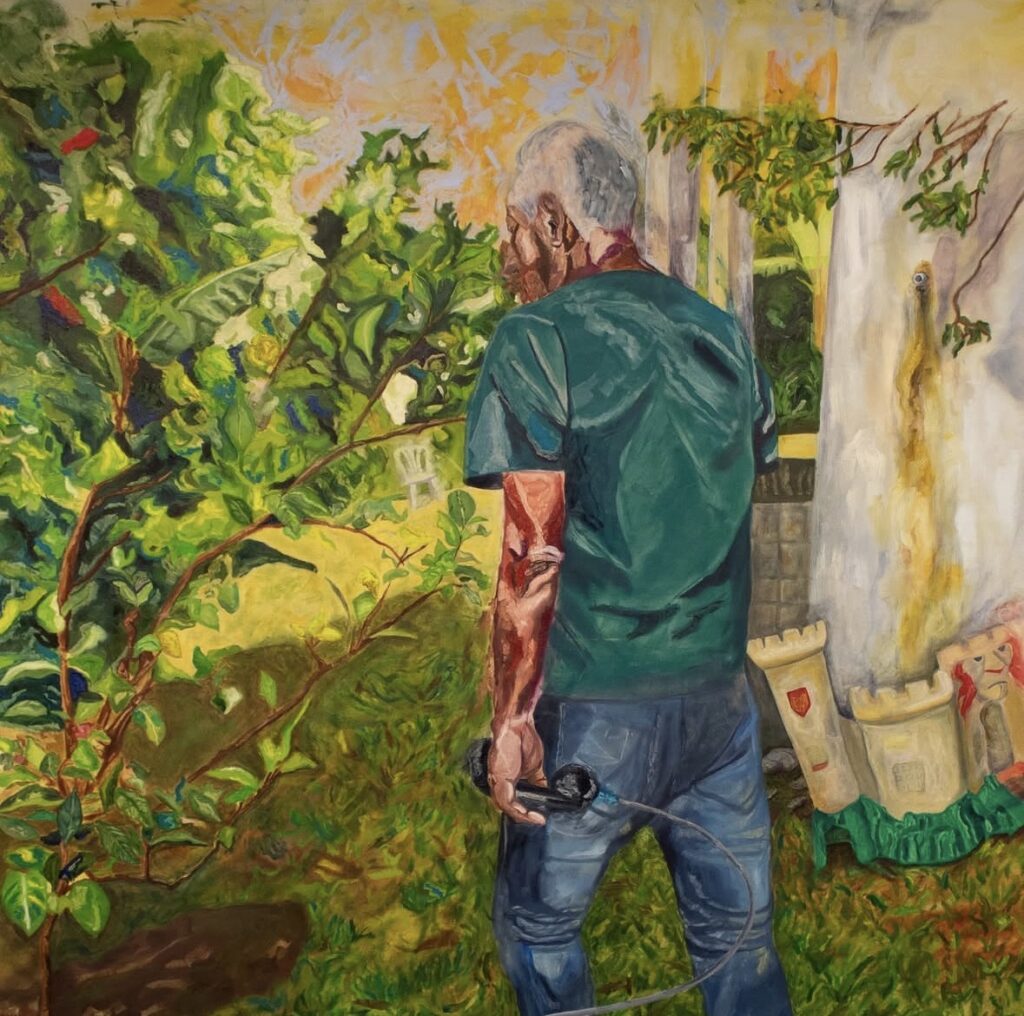
Oil on canvas
2026.
Fresh Squeezed 10: Emerging Florida Artists will be on display at the Morean Arts Center until June 25, 2026.
719 Central Ave, St. Petersburg, FL, 33701
Mon – Sat 10:00am – 5:00pm
Sun: Closed
727-822-7872
Artists Featured:
Ysabel Flores – Tallahassee, FL @ysabelfloresart
Kimberly Vorperian – St. Pete, FL @bodhibasics
Clancy Riehm Largo, FL @clansmari
Jamie Rodriguez – West Palm Beach, FL @thejrodelement
Alberto Alonso – Winter Haven, FL @alberto_joelalonso
Angelina Palmisano – Maitland, FL @angelinapalmisano
